
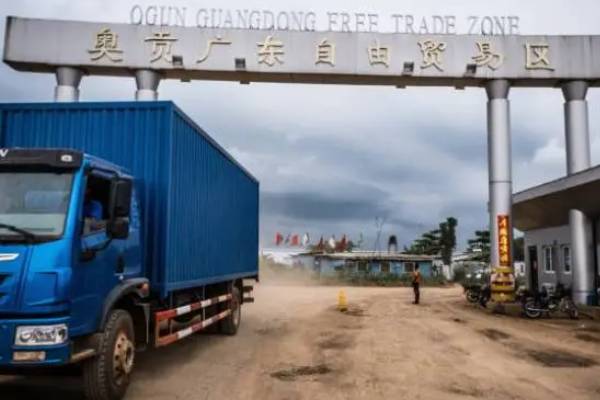
Over the last 14 years, the Ogun-Guangdong Free Trade Zone (FTZ) has quietly become one of the most powerful engines of economic growth in Ogun State. Born out of a commercial partnership between China’s Guangdong Province and Ogun State, this industrial hub has drawn over $300 million in foreign investment and employs more than 6,000 locals, a feat few would have predicted when the idea was first imagined.
Igbesa, a community in Ado-Odo/Ota, has changed dramatically since the FTZ’s inception. Walking through the zone today, you’ll see a bustling industrial area where factories hum, workers are busy, and new buildings are under construction. According to Prince Gboyega Nasir Isiaka, chairman of the new FTZ management board, about 44 companies are fully operational, while 17 are still under construction. He explains that this growth doesn’t just boost corporate balance sheets, it changes lives in the host communities.
Isiaka, part of the group that first envisioned the FTZ during Governor Gbenga Daniel’s administration, recently led a tour in the zone. He was frank about the challenges: for the FTZ to realize its full potential, issues like road infrastructure, security, and multiple taxation must be addressed, but despite those hurdles, his optimism is clear. He promised a more inclusive framework would be adopted, one that reflects the “law of the land” while safeguarding the interests of the local community.
One of the most remarkable things about the FTZ is its direct economic impact. Over 6,000 people from the local environment are employed within the zone. These are not just indirect contractors; many are full-time workers in manufacturing firms, giving Igbesa and its surrounding communities a major boost in employment and standard of living.
To strengthen ties with the host community, Isiaka mentioned that a Memorandum of Understanding (MoU) will soon be drafted. This agreement aims to ensure harmonious industrial operations and long-lasting community investment. More than just business expansion, the FTZ leadership says they will also take community social responsibility seriously, committing to projects that benefit both workers and residents.
Beyond the FTZ’s direct impact, its success has broader implications. A recent academic study by Crawford University highlights how the zone has transformed Igbesa into a major industrial center. The research confirms that this isn’t just about factories — it’s a long-term economic engine powered by sustainable foreign direct investment (FDI), but the FTZ story isn’t without tension. Some local voices have expressed concern.
Community leaders from Igbesa and nearby areas have raised issues around land acquisition and promised compensation, even threatening to shut down investors they believe are encroaching on their land. In response, FTZ administrators argue that all allocations were legally acquired and that meaningful compensation has been disbursed.
Still, for many in Ogun State, the positive outcomes are clear: industrial growth, job creation, and increasing relevance on the economic map. As the FTZ board settles in under Isiaka’s leadership, the challenge now is ensuring the next phase of growth continues and that the zone’s benefits resonate deeply across its host community.
This is more than just an economic zone; it’s a vision turned into reality, a bridge between local opportunity and global investment, and a potent symbol of what public-private (and international) partnerships can achieve. Remove all links and dashes that.